> For the complete documentation index, see [llms.txt](https://docs.sprinto.com/llms.txt). Markdown versions of documentation pages are available by appending `.md` to page URLs; this page is available as [Markdown](https://docs.sprinto.com/monitors/cloud-and-infrastructure-monitoring/aws/how-to-resolve-sprinto-check-for-monitoring-aws-load-balancer-alb-or-classic-load-balancer-clb-error.md).
# How to resolve Sprinto check for monitoring AWS Load Balancer (ALB) or Classic Load Balancer (CLB) errors
### About
Sprinto Check: AWS load balancer errors should be monitored or AWS classic load balancer errors should be monitored
When you integrate your AWS account with Sprinto, the platform fetches the list of services from your AWS account. If you're using AWS Application Load Balancers (ALB) or Classic Load Balancers (CLB) and haven't set up a monitoring alert for the HTTPCode\_Target\_5XX\_Count (for ALBs) or HTTPCode\_ELB\_5XX (for CLBs) metric, Sprinto activates this check for all Load Balancers under your account.
### Purpose
Monitoring 5XX errors in your AWS Load Balancer, specifically focusing on the HTTPCode\_Target\_5XX\_Count metric for Application Load Balancers and HTTPCode\_ELB\_5XX for Classic Load Balancers, is crucial to ensure the health and reliability of your applications. Sprinto promptly sends notifications if the error count exceeds the defined threshold, allowing you to take proactive measures to address potential issues.
### How to Resolve
To address this check, follow the steps below to create an AWS CloudWatch alert for monitoring AWS Load Balancer 5XX errors.
#### Before you Begin
* Ensure you have "Admin" access on the AWS account to create alerts.
* Confirm the existence of Application Load Balancers (ALB) or Classic Load Balancers (CLB) on your AWS account for which you want to set up alerts.
* Log in to Sprinto as an administrator.
#### Create a Monitoring Alert for Application Load Balancers (ALB)
1. Log in to your [AWS console](https://aws.amazon.com/console/) using your credentials.
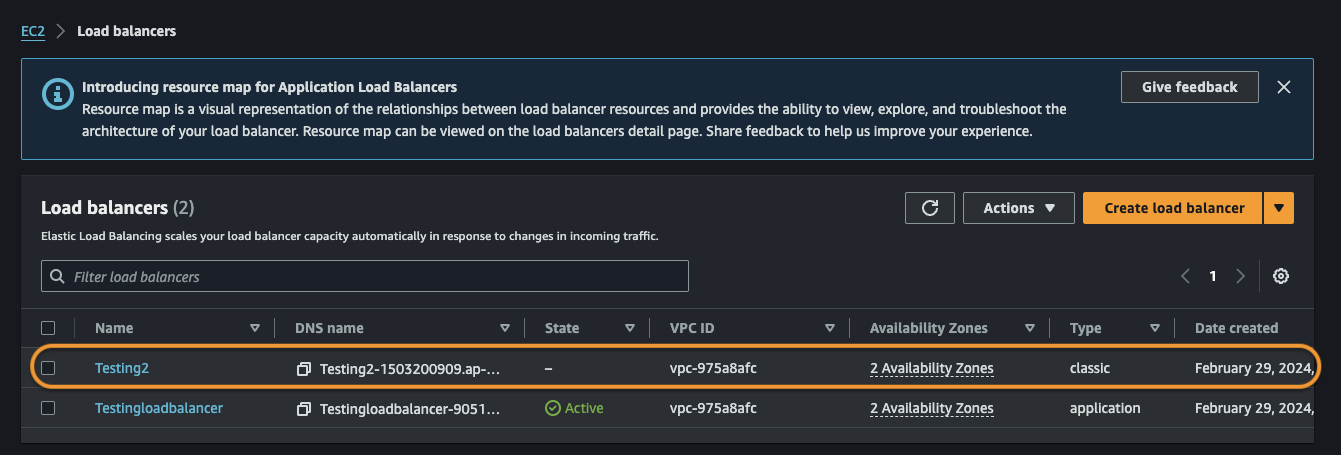
2. Navigate to the **Load balancer** web service and select your desired ALB to create a monitoring alert.
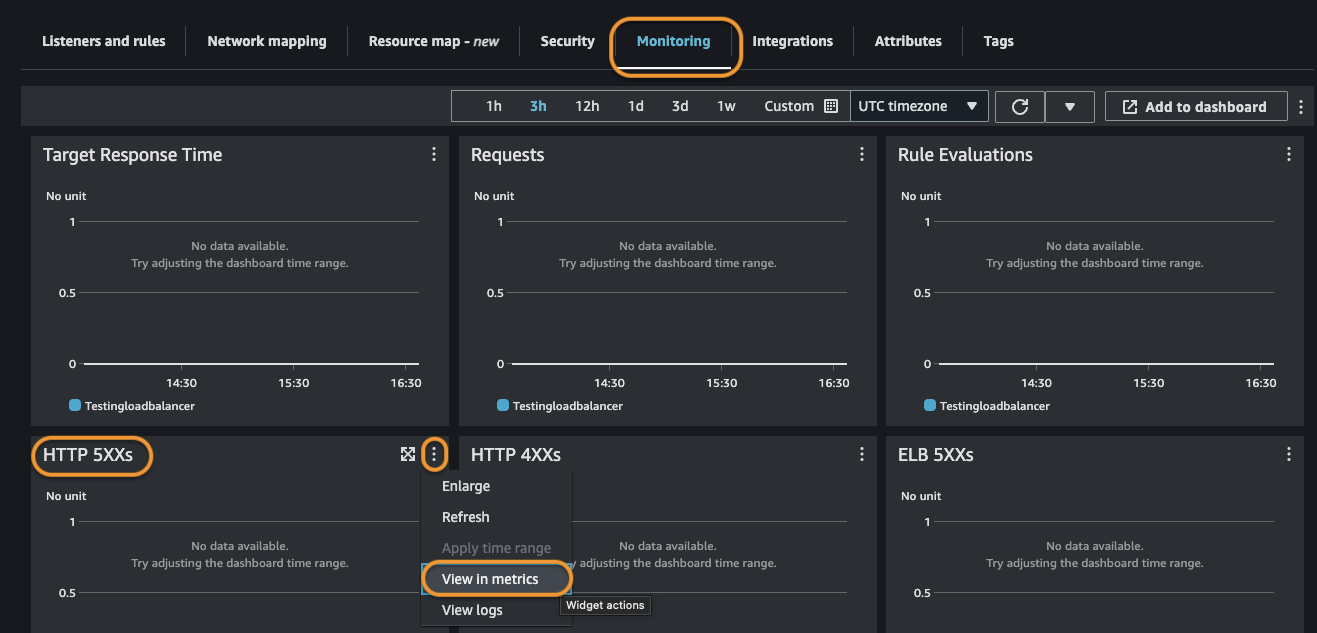
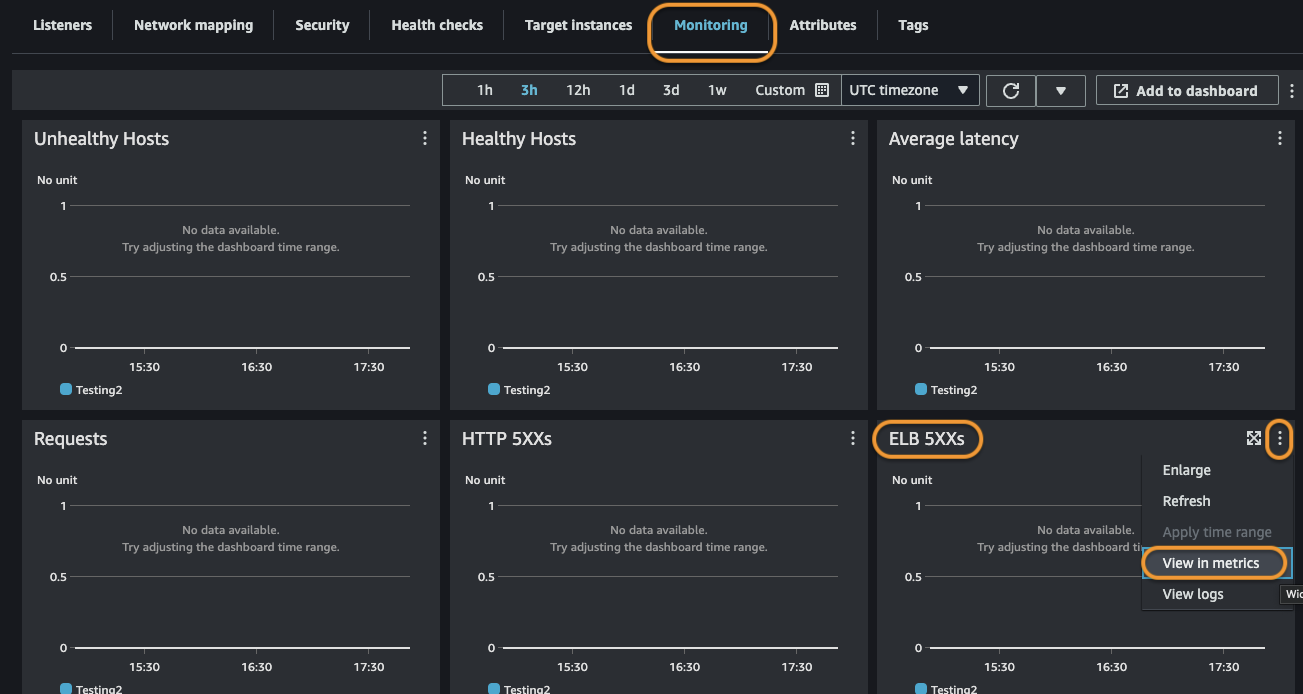
3. On the load balancer page, Select the **Monitoring** tab, then select **View in metric** for **HTTP 5XXs** metric.
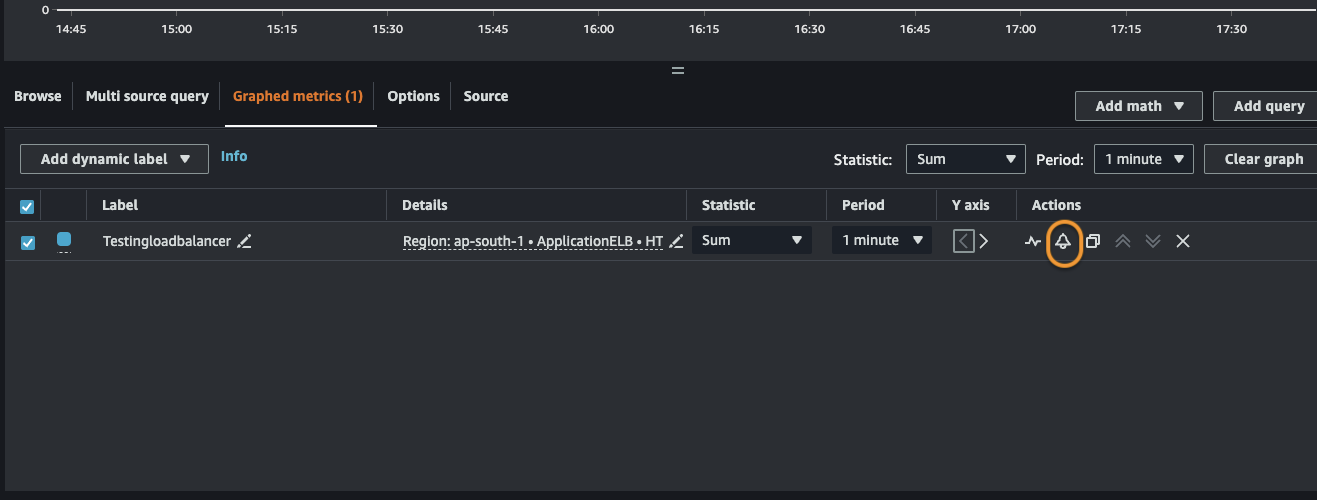
4. Now, click on the alert icon under **Actions**.
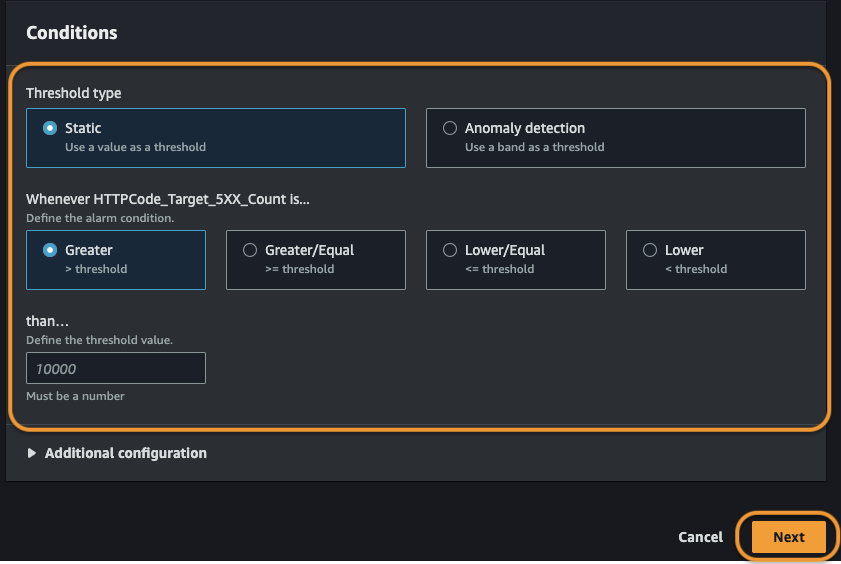
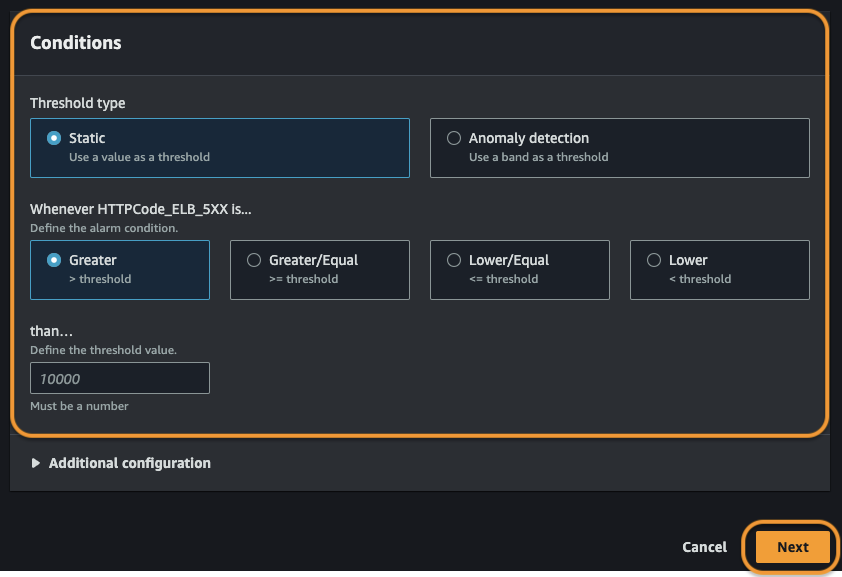
5. Specify the conditions to define the alert trigger point, then click Next.
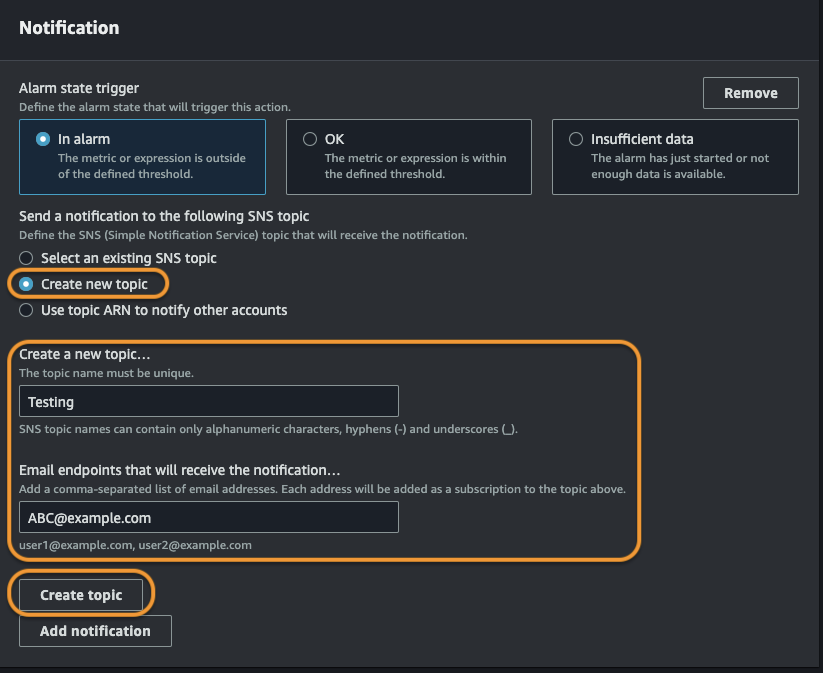
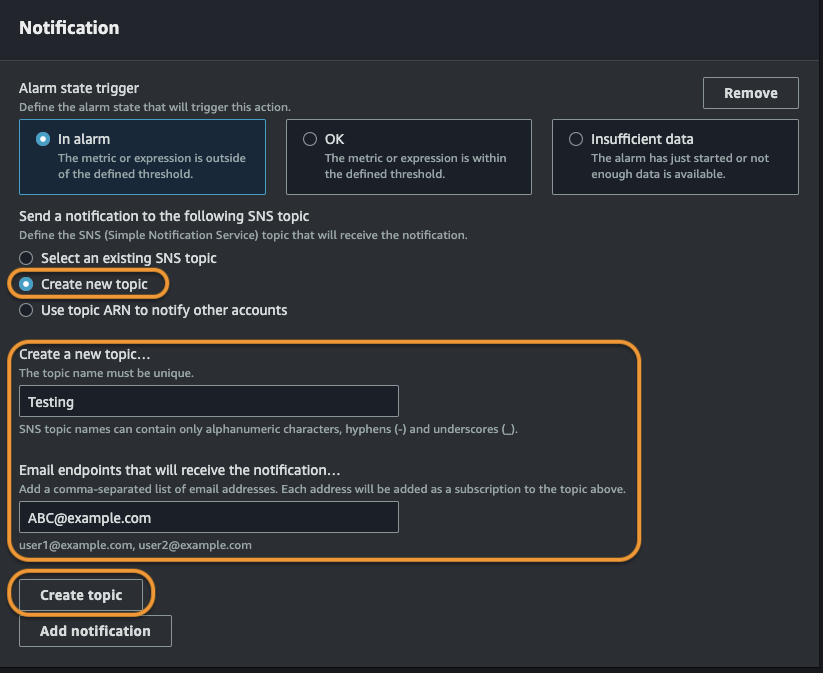
6. On the Configure Action page:
* **Create New Topic**: Enter the topic name and email address for alert notifications. Ensure your created topic gets selected for notification.
* Click Next.
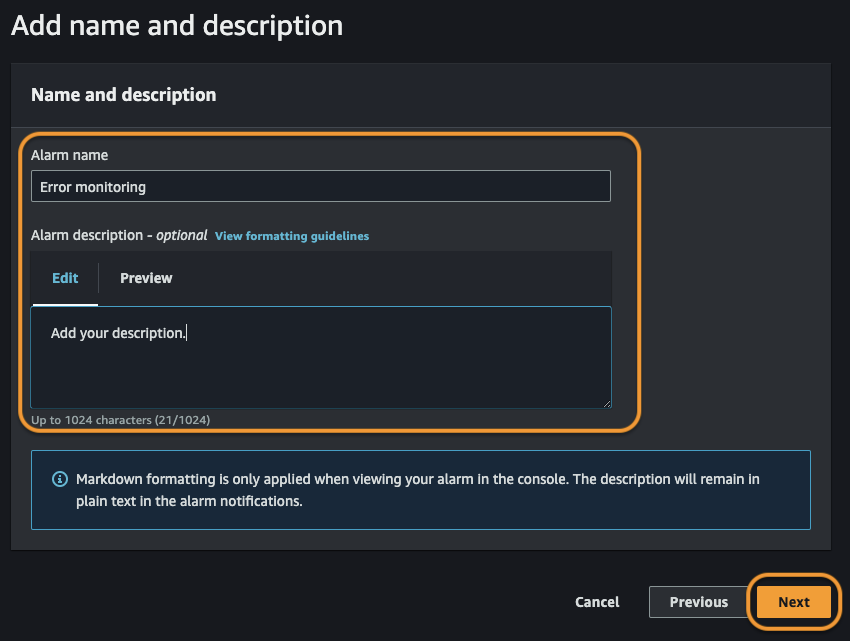
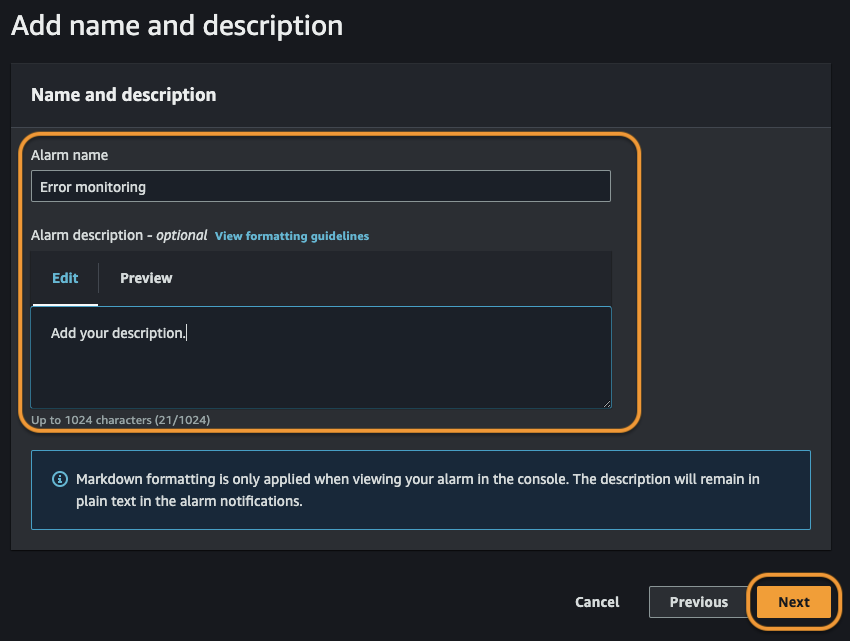
7. Enter a name and description for the created alert, then click **Next**.
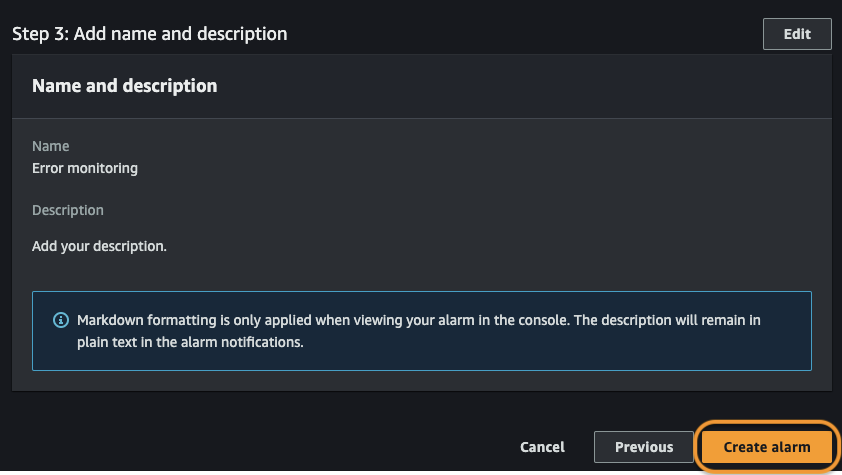
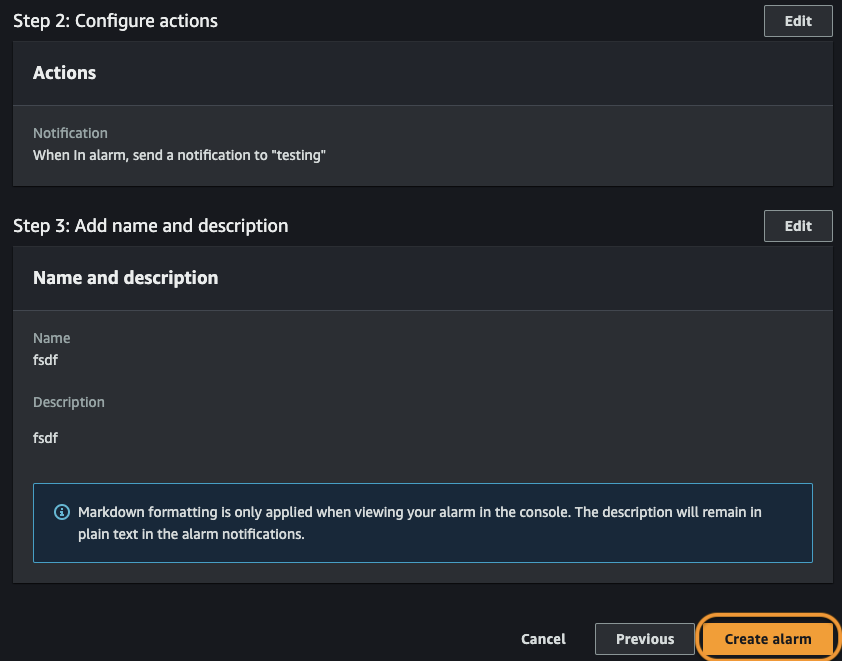
8. Preview your created alarm and edit any parameters if required, then click **Create Alarm**.
#### Create a Monitoring Alert for Classic Load Balancers (ELB)
1. Log in to your [AWS console](https://aws.amazon.com/console/) using your credentials.
2. Navigate to the **Load balancer** web service and select your desired ELB to create a monitoring alert.
3. On the load balancer page, Select the **Monitoring** tab, then select **View in metric** for **ELB 5XXs** metric.
4. Now, click on the alert icon under **Actions**.
5. Specify the conditions to define the alert trigger point, then click **Next**.
6. On the Configure Action page:
1. **Create New Topic**: Enter the topic name and email address for alert notifications. Ensure your created topic gets selected for SNS.
2. Click **Next**.
7. Enter a name and description for the created alert, then click **Next**.
8. Preview your created alarm and edit any parameters if required, then click **Create Alarm**.
### Final step
Once the monitoring alerts are created on CloudWatch for AWS Load Balancer, Sprinto retrieves the changes, and the Sprinto check status is set to "Passing."
For additional assistance with the Sprinto check, please reach out to [Sprinto Support](mailto:www.support@sprinto.com). We're here to help!
---
# Agent Instructions
This documentation is published with GitBook. GitBook is the documentation platform designed so that both humans and AI agents can read, navigate, and reason over technical content effectively. Learn more at gitbook.com.
## Querying This Documentation
If you need additional information that is not directly available in this page, you can query the documentation dynamically by asking a question.
Perform an HTTP GET request on the current page URL with the `ask` query parameter, and the optional `goal` query parameter:
```
GET https://docs.sprinto.com/monitors/cloud-and-infrastructure-monitoring/aws/how-to-resolve-sprinto-check-for-monitoring-aws-load-balancer-alb-or-classic-load-balancer-clb-error.md?ask=&goal=
```
`ask` is the immediate question: it should be specific, self-contained, and written in natural language.
`goal` is optional and describes the broader end goal you are ultimately trying to accomplish on behalf of the user. GitBook uses it to tailor the answer towards what is most useful for that goal.
The response will contain a direct answer to the question and relevant excerpts and sources from the documentation.
Use this mechanism when the answer is not explicitly present in the current page, you need clarification or additional context, or you want to retrieve related documentation sections.