> For the complete documentation index, see [llms.txt](https://docs.sprinto.com/llms.txt). Markdown versions of documentation pages are available by appending `.md` to page URLs; this page is available as [Markdown](https://docs.sprinto.com/monitors/authentication-and-access-monitors/how-to-resolve-sprinto-check-for-rotating-the-older-iam-user-access-keys.md).
# How to resolve Sprinto check for rotating the older IAM user access keys
### About:
Sprinto check: Enabled IAM User Access Keys are not older than 90 days
The above-mentioned Sprinto check verifies that all enabled AWS Identity and Access Management (IAM) user access keys are updated within 90 days from generation. Access keys are used to securely access AWS services and resources programmatically.
### Purpose:
The purpose of this check is to enforce regular rotation of IAM user access keys, which is a security best practice. By rotating access keys regularly, you can mitigate the risk of key compromise or misuse, as it reduces the potential window of exposure for any compromised keys. This practice helps maintain the confidentiality and integrity of your AWS resources and reduces the potential impact of a security breach.
### How to fix this check:
Follow the below steps to resolve this check:
#### Before you begin
* Ensure you have administrator privilege to manage AWS IAM user access keys.
#### Rotating IAM User Access Keys
Follow the below steps to rotate the older IAM user access keys:
1. Log in to AWS Console using your credentials.
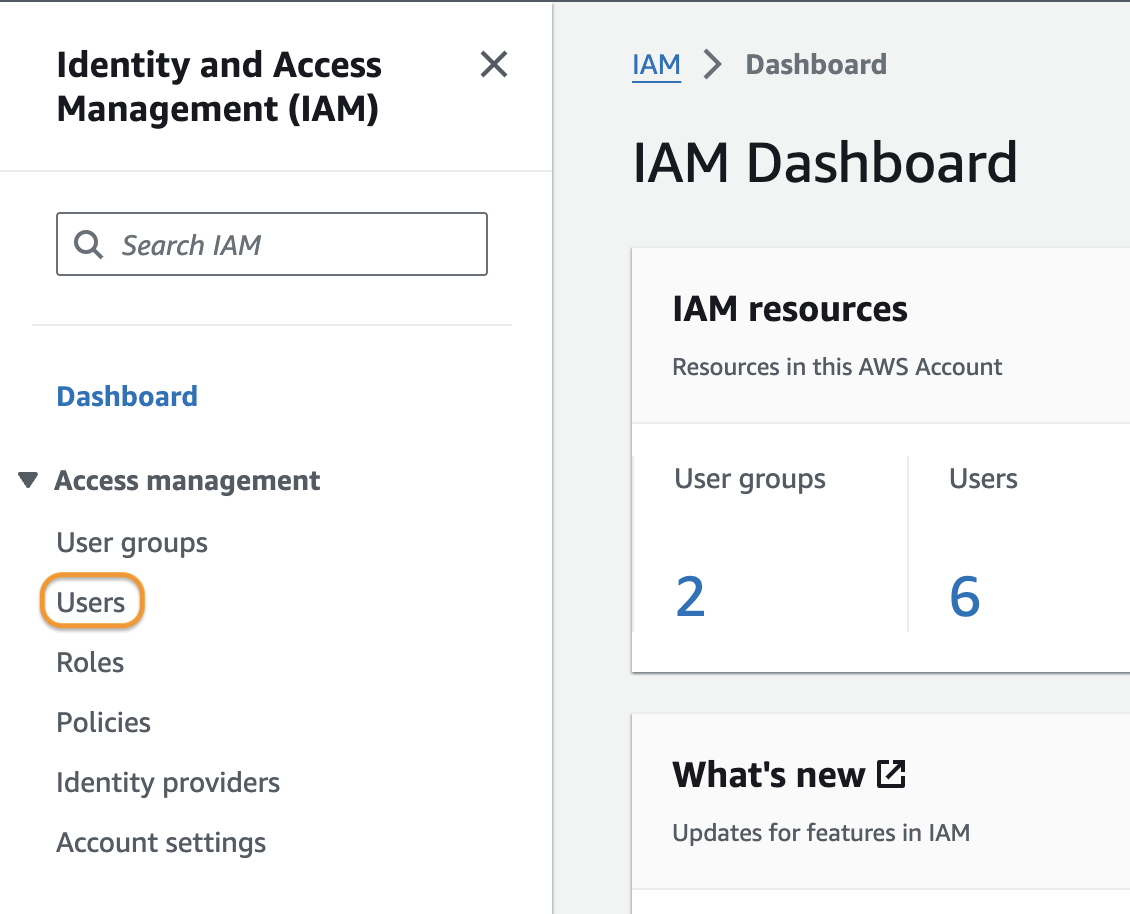
2. Navigate to the AWS IAM service.
3. Click on Users under Access Management from the left-side navigation bar.
4. Select the user for which you wish to check the access key timeline.
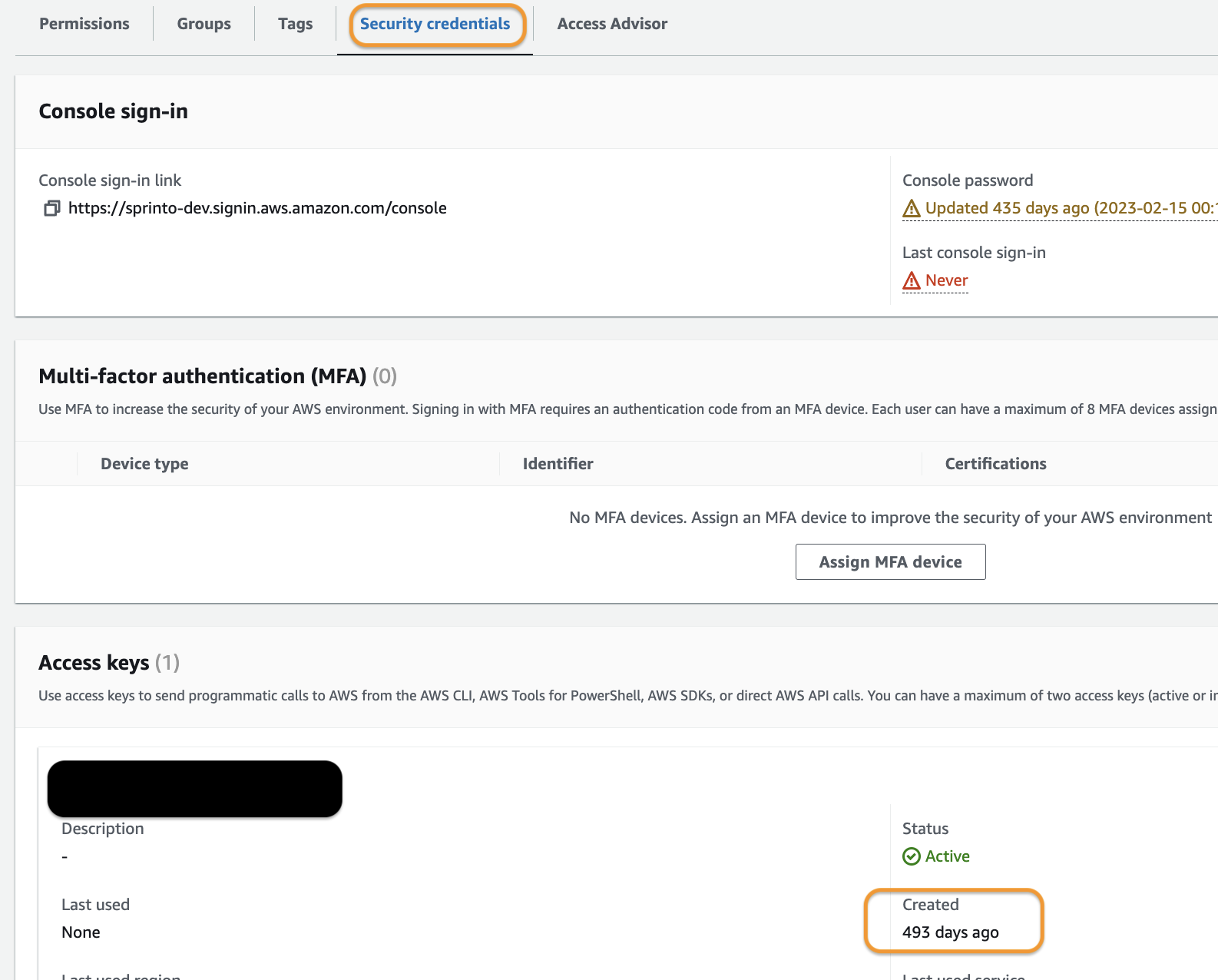
5. Select the Security credentials tab, and review the Created column under the Access keys section.
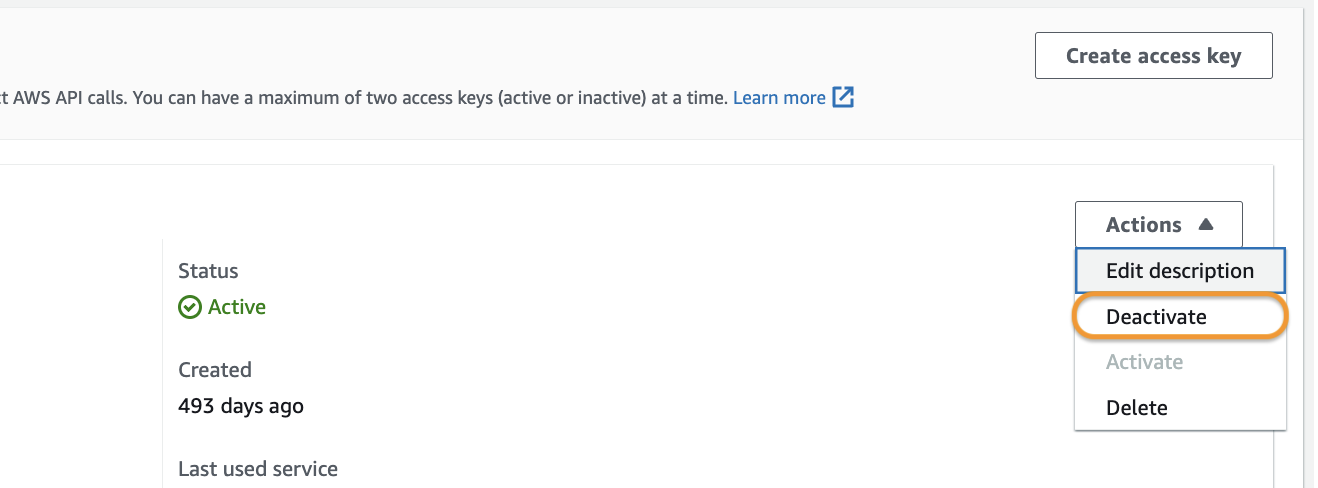
6. Click Deactivate under the Actions menu if the access key is over 90 days.
7. Click on Create Access Key to create a new access key. Test the newly generated key by accessing the services accessed by the deactivated key.
8. Repeat steps 4 to 7 for each IAM user access key on your AWS account.
Sprinto will detect the configuration change and set the check status to "Passing.”
Contact [Sprinto support](mailto:www.support@gmail.com) if you have any queries regarding the check or need assistance.
---
# Agent Instructions
This documentation is published with GitBook. GitBook is the documentation platform designed so that both humans and AI agents can read, navigate, and reason over technical content effectively. Learn more at gitbook.com.
## Querying This Documentation
If you need additional information that is not directly available in this page, you can query the documentation by asking a question.
Perform an HTTP GET request on the following URL with the `ask` and `goal` query parameters:
```
GET https://docs.sprinto.com/monitors/authentication-and-access-monitors/how-to-resolve-sprinto-check-for-rotating-the-older-iam-user-access-keys.md?ask=&goal=
```
`ask` is the immediate question: it should be specific, self-contained, and written in natural language.
`goal` is what the user is ultimately trying to achieve, the reason they need the answer. Sharing it helps GitBook give you a better, more relevant answer. A goal is most helpful when it describes the outcome the user wants rather than restating the question. For example, with `ask=how do I create an API token`, a goal like `automate deployments from our CI pipeline` lets GitBook tailor the answer to that use case.
The response will contain a direct answer to the question and relevant excerpts and sources from the documentation.
Use this mechanism when the answer is not explicitly present in the current page, you need clarification or additional context, or you want to retrieve related documentation sections.